Screens are always present in everyday life in the current digital world. Work or communication via computers or cellphones, and tablets for enjoyment among people. Although technology enhances productivity and convenience, too much screen time has raised fresh eye health problems. After many hours of screen viewing, many people suffer hazy vision, headaches, and tired eyes. Maintaining long-term eye comfort and visual clarity depends on establishing easy routines to lessen this stress.
What Is Digital Eye Strain?
Computer vision syndrome, sometimes known as digital eye strain, is a collection of eye and vision disorders resulting from extended screen exposure. Dryness, itching, eye tiredness, and concentrating problems are among the most frequent symptoms. It is aggravated by poor lighting, incorrect distances to the screen, or long intervals of time without rests. In reading printed pages or texts, the eye blinks often to focus on the next page or line, but with the computer screen, this is not the case, which places extra stress on eye muscles and reduces natural blinking.
Understanding the Rule and Its Purpose
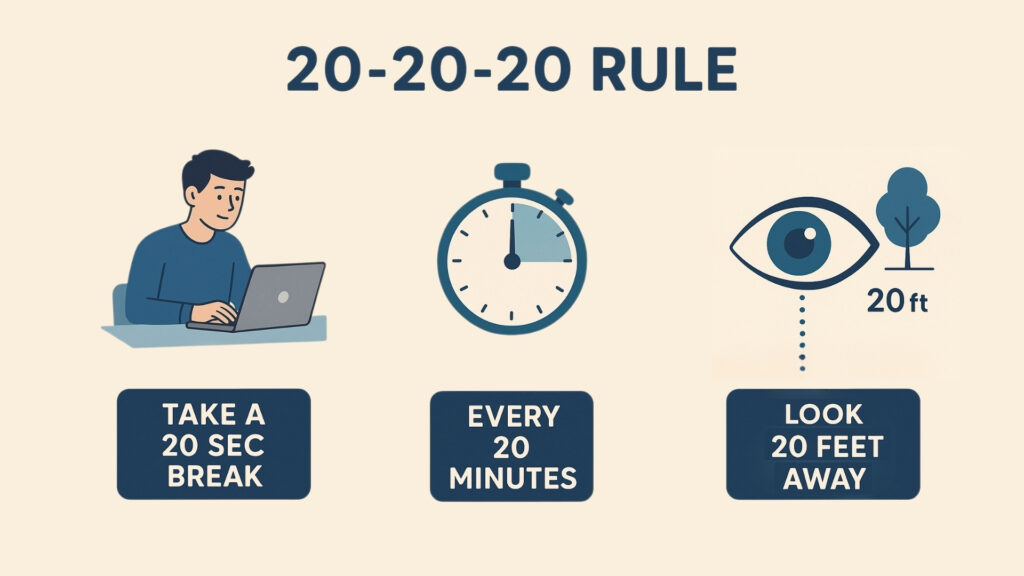
The 20 20 20 Rule is very effective in helping the eyes to take regular breaks. The purpose of this rule is to provide the eyes with relief from being focused on something close for too long. Eye muscles rest and recover by diverting attention away from the screen. Making it perfect for hectic schedules at home or work, this habit is simple to recall and does not obstruct productivity.
How the Rule Works in Everyday Life
Applying the rule is straightforward. Every twenty minutes, spend twenty seconds away from your screen concentrating on something around twenty feet away. This brief pause lets the eyes relax and regain moisture. Many individuals also utilize this period to consciously blink or stretch their shoulders and necks. This little habit helps over time avoid dryness, boost concentration, and minimizes the discomfort connected with prolonged screen usage.
Why Screens Affect the Eyes So Much
Digital text lacks the sharpness and contrast of printed pages, screens add more strain on the eyes. There is less blinking when people are viewing screens, as a result, people develop irritated eyes and reduced lubrication from blinking while concentrating on the screen. Blue light from computers can cause more irritation on the eyes as people can develop irregular sleep patterns by viewing the screen at night. Following habits like the 20 20 20 Rule assist to alleviate these consequences by disrupting long periods of visual attention and promoting better eye behavior.
Benefits Beyond Eye Comfort
The advantages of this practice go beyond eye health. Regular screen breaks help to alleviate shoulder pain, neck stiffness, and poor posture brought on by extended sitting. Short pauses can help to avoid tiredness and thereby increase mental focus and productivity. Students and workers frequently find they are more productive after short breaks, hence eye care is good for performance as well as for health.
Who Should Follow This Rule
People that spend a lot of time staring at screens will surely benefit from this routine. Many office workers, as well as students and online freelancers and gamers, are at risk of digital eye strain. Also, children exposed to screens from educational content should implement healthy vision practices. Implementing this 20 20 20 Rule as a regular routine will surely help maintain healthy vision at any age and prevent the risk of long-term discomforts of the eyes.
Tips to Make the Habit Consistent
This rule needs consistent application to be successful. Establishing the behavior can be facilitated by reminders, screen-break applications, or combining breaks with regular activities. Keeping screen brightness normal, having proper viewing distance, and adequate lighting will further minimize the strains. Regular blinking and keeping good posture during breaks will help with overall comfort. Over time, these behaviors turn out to be easy and natural.
Final Thoughts
To care for your eyes, there is no need for expensive tools and complex procedures. And by following some easy tips, you can easily achieve greater comfort and enhance eye health. Knowing how screen usage impacts the eyes and taking small steps to avoid stress can have a long-lasting effect. The Vision Guide is a useful resource for maintaining good eyes in a screen-centered environment since it offers reliable eye care recommendations, practical ideas, and current information on visual health.